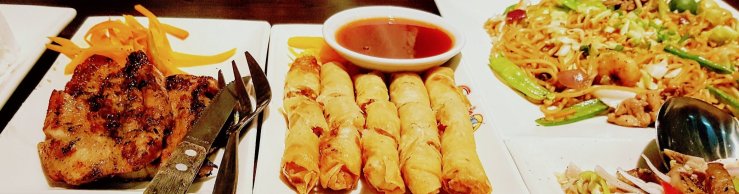
When someone discovers you are Filipino, typically the conversation moves to food — and the popular favorite is almost always Adobo, a dish composed of chicken or pork slowly braised in a soy/vinegar/calamansi/oyster sauce/peppercorn/bay leaf/chili sauce, which has a great balance of salt,fat, and acid all of which make a dish great. Another dish that strikes familiarity is Lumpia [loom-pia], a delectable fried crepe spring roll, that can please any palate. After-all, who doesn’t love fried food?
Lumpia, a classic spring roll, although the most typical Filipino dish, it is also, the most underrated. Growing up, I didn’t really know what a Shanghai roll was, I didn’t even know it was even really significant. The Lumpia I knew, was one that was filled with pork, shrimp, sweet potato (Kamote), green beans, bean sprouts, fish sauce, and a dash of the infamous ‘Magic-Sarap’. Which would only be served with a vinegar and garlic condiment.
Every Filipino household has their own interpretation of a good Lumpia, all which have gained their own respect.
Shanghai Rolls, another spring roll, consists of minced meat, usually ground pork and shrimp or corned beef, that are wrapped tightly to form a mini delectable one-biter, usually accompanied with a sweet chili sauce, these rolls are often found in Filipino “Turo-Turo” restaurants, because not only are they delicious and convenient, but cost effective as well. Filipino, “Turo-Turo” restaurants are hidden gems that serve a plethora of native dishes, inspired by native street food.
I guess the point of this insight, is what makes a “Lumpia” Filipino? It is also an ode to the delicious crispy Filipino delight, that is not only a conversation starter, but is as familiar as the good ol’ hamburger, which are both in their own right, classic.
 Change of Taste